GroundLens Journey
- Learn
- Discover
- Experience
- Decide
Why this matters
Listing photography is the primary evidence most relocating buyers use — and it is the evidence least capable of answering their real questions.
What the frame excludes
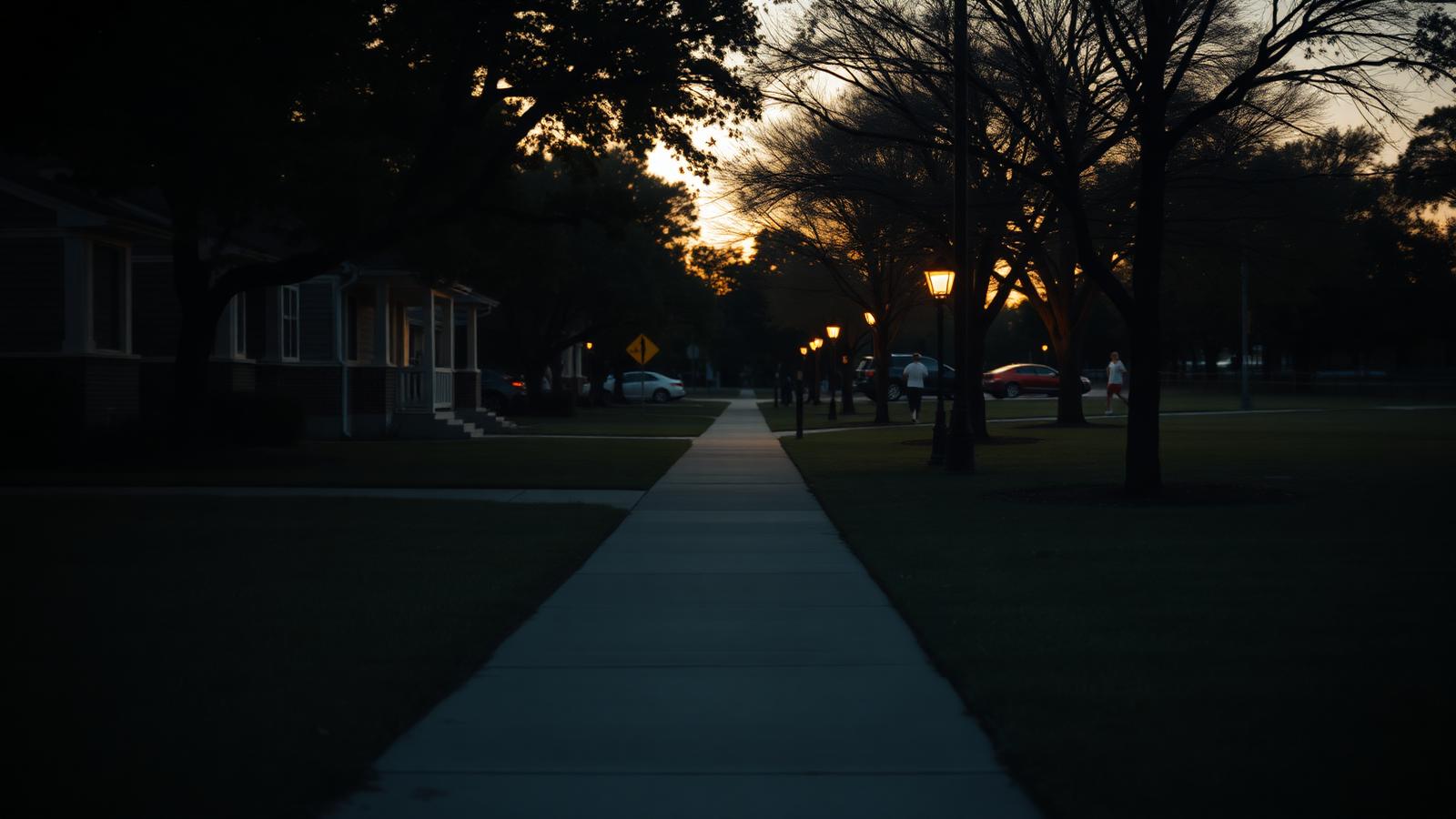
Every photograph is a decision about what to leave out. Wide-angle lenses expand rooms and yards. Sky-forward exteriors crop the street. Twilight shots hide surrounding conditions entirely.
None of this is deceptive by default. It is simply marketing photography doing its job.
- What sits directly across the street and behind the property.
- Elevation and drainage across the lot.
- Distance to the nearest arterial road and the sound that comes with it.
- Parking behavior, sidewalk continuity, and street lighting.
- Construction phase, staging areas, and future pad sites nearby.
Read the map before the gallery
Before looking at interior photos, look at the property in a map view and a recent aerial. Note what is adjacent, what is undeveloped, and where the entrances and exits funnel traffic.
Then, and only then, look at the home. This ordering keeps the property from framing your view of the place.
Video that is not staged
Unedited, continuous footage of a street or a route is worth more than any curated gallery. It shows sequence, distance, and condition in one take — the three things photographs remove.
Play Summary
- 1Photographs describe the property; maps and video describe the place.
- 2Look at the surroundings before the interior.
- 3Continuous footage preserves sequence and distance that galleries remove.
- 4Treat adjacent vacant land as an unanswered question.
Before moving on…
Communities to consider · Greater Houston
Tap the heart to save a community to My Relocation Notebook. Saved communities can be referenced by a future GroundLens Report.
Related Resources
Experience a GroundLens Report™
Walk through a complete report to see exactly how these observations are documented for a real address.